I am a third-year undergraduate student at Cornell University studying Engineering Physics with interests in atomic physics and experimental quantum science. My research experience spans nonlinear and quantum optics, atomic magnetometry, and trapped-ion systems. I am particularly interested in quantum technologies for sensing, precision measurement, communication, and information processing.
I am currently an undergraduate research assistant working under Prof. Or Katz at Cornell on quantum sensing for the dark matter search. Previously under Prof. Katz, I co-led efforts towards a novel photonic quantum memory with the Cornell Quantum Computing Association and worked on beam delivery optics for the group's Ba137 ion trap.
In Summer 2025, I joined SRI International as a Quantum Sciences Intern in the Applied Systems and Technology Division, where I worked on system integration of atomic magnetometers for pointing, navigation, and timing (PNT) problems in collaboration with Twinleaf and the Romalis Group at Princeton. Earlier, I was a research assistant in the Disa Lab at Cornell working on ultrafast pulse compression for terahertz generation and spectroscopy of ferroelectric and ferromagnetic materials.
Research keywords: atomic physics, quantum sensing, optical communication, and precision measurement.
I am actively seeking Ph.D. and industry positions starting Fall 2027. If you or any of your colleagues are interested in my profile, please feel free to reach out!
Warning
Problem: The current name of your GitHub Pages repository ("Solution: Please consider renaming the repository to "
http://".
However, if the current repository name is intended, you can ignore this message by removing "{% include widgets/debug_repo_name.html %}" in index.html.
Action required
Problem: The current root path of this site is "baseurl ("_config.yml.
Solution: Please set the
baseurl in _config.yml to "Recent Highlights
Publications
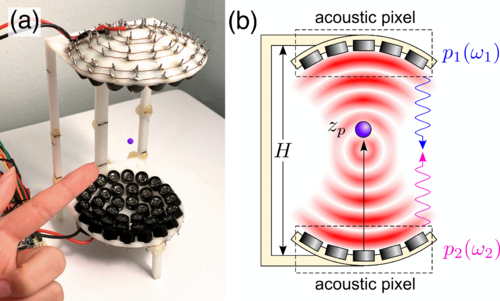
Spectral holographic trapping: Creating dynamic force landscapes with polyphonic waves
Mia Morrell, Julian Lee, David Grier
Physical Review Letters E 2024
Acoustic trapping uses forces exerted by sound waves to transport small objects along specified trajectories in three dimensions. We demonstrate a novel approach to spectral holographic acoustic trapping by projecting acoustic conveyor beams that move millimeter-scale objects along prescribed paths.
Spectral holographic trapping: Creating dynamic force landscapes with polyphonic waves
Mia Morrell, Julian Lee, David Grier
Physical Review Letters E 2024
Acoustic trapping uses forces exerted by sound waves to transport small objects along specified trajectories in three dimensions. We demonstrate a novel approach to spectral holographic acoustic trapping by projecting acoustic conveyor beams that move millimeter-scale objects along prescribed paths.
Projects
Quantum Sensing for Dark Matter Detection
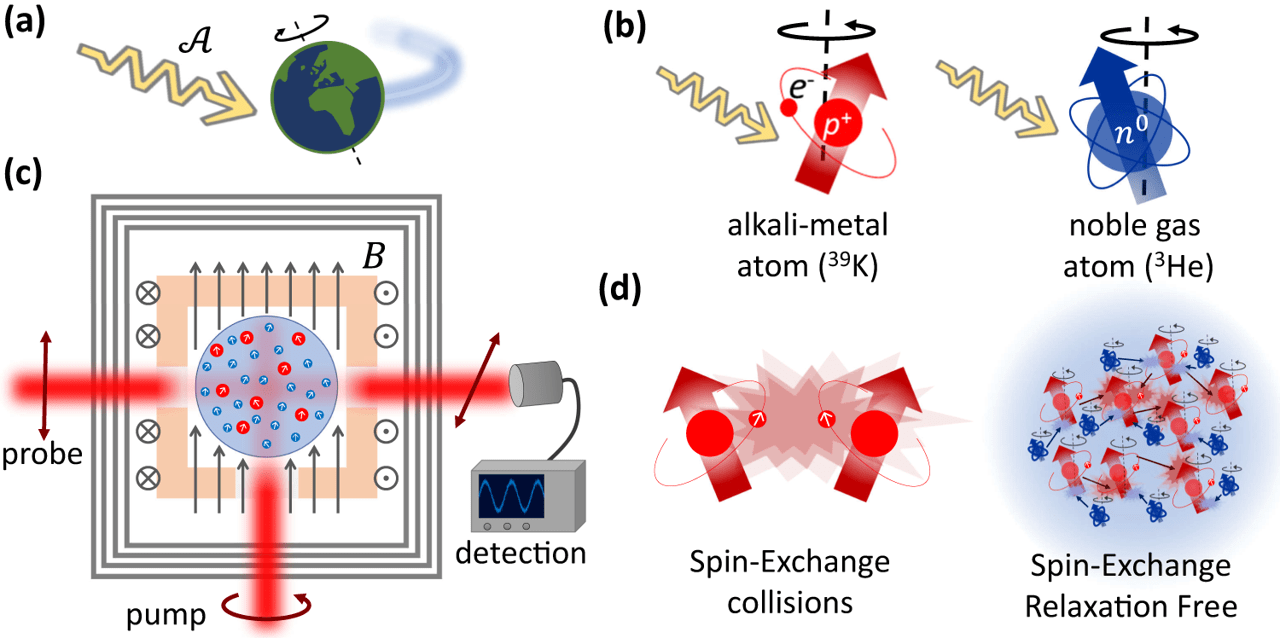
I am currently building a precision setup for dark matter detection using a novel dual-probe scheme for alkali-noble gas magnetometry, advised by Prof. Or Katz. The project involves optical design, characterization, and photon shot noise-limited balanced photodetection to investigate axion-like particle coupling to electrons and neutrons.
Quantum Sciences Internship at SRI International
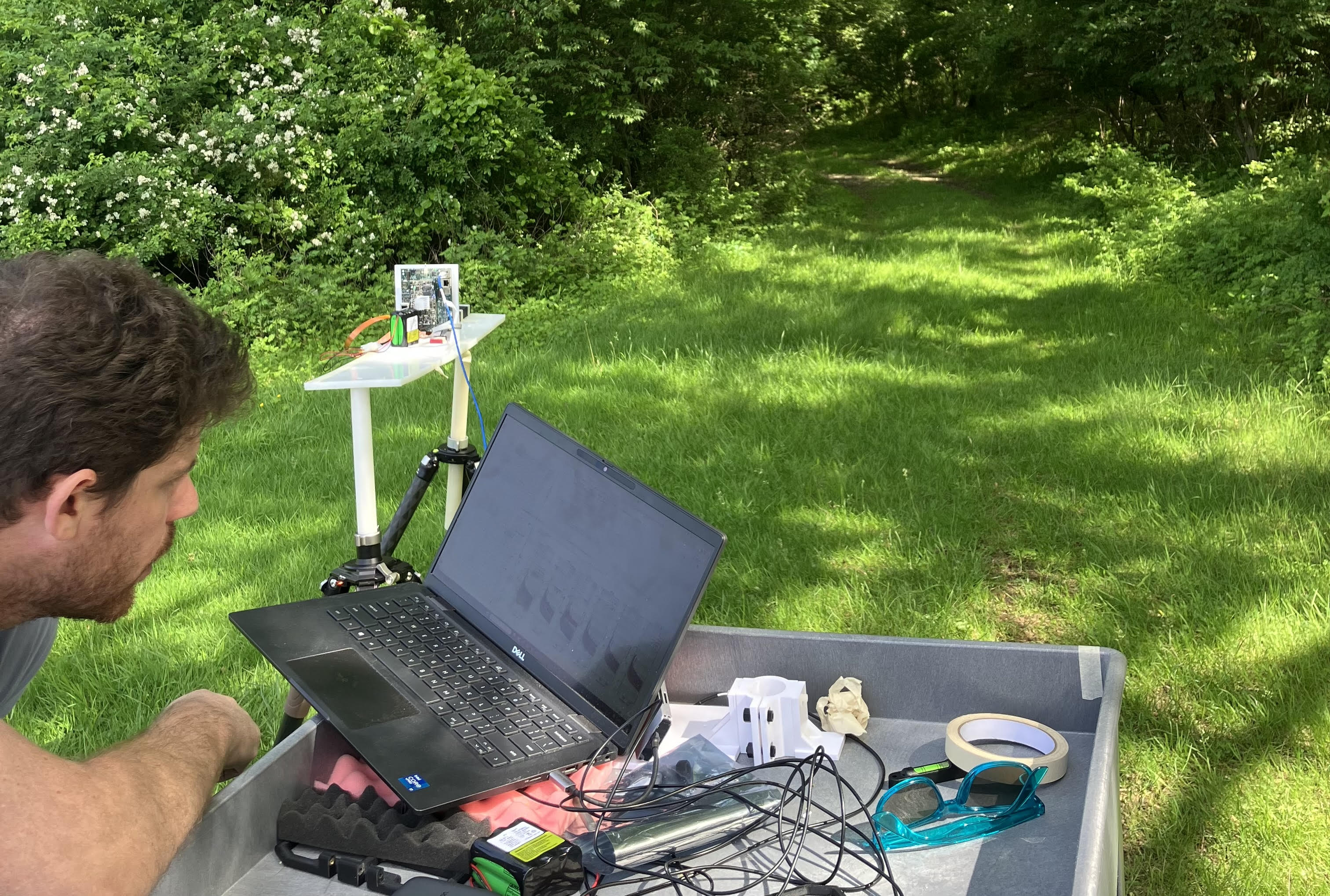
In Summer 2025, I worked on system integration of atomic magnetometers for localization problems at SRI in Princeton, NJ. My work included tuning FPGA-controlled DBR lasers to optimize device sensitivity, developing the software pipeline for integrated data acquisition, sensor fusion, and signal processing through an interactive GUI, and implementing an automated testbed for optical characterization.
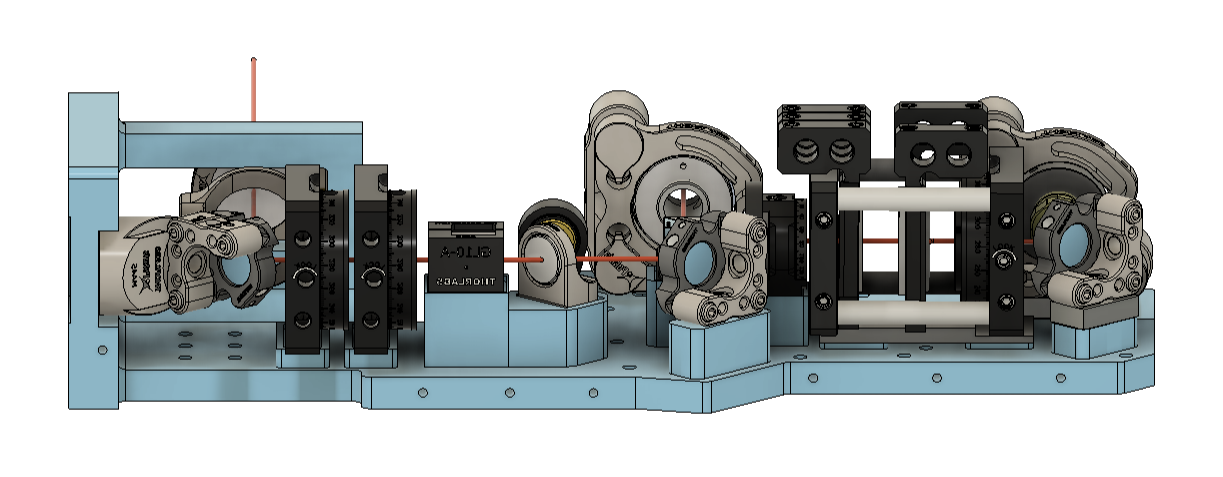
Ion Trap Delivery Board
In Spring 2024, I joined the Katz Group and worked on designing and building the beam delivery optics for 493, 650, and 1762nm lasers in the Ba137 ion trap. This involved characterizing beam divergence, chromatic shifts, and optical abberations followed by designing the delivery board in Autodesk Fusion and fabricating components in-house.
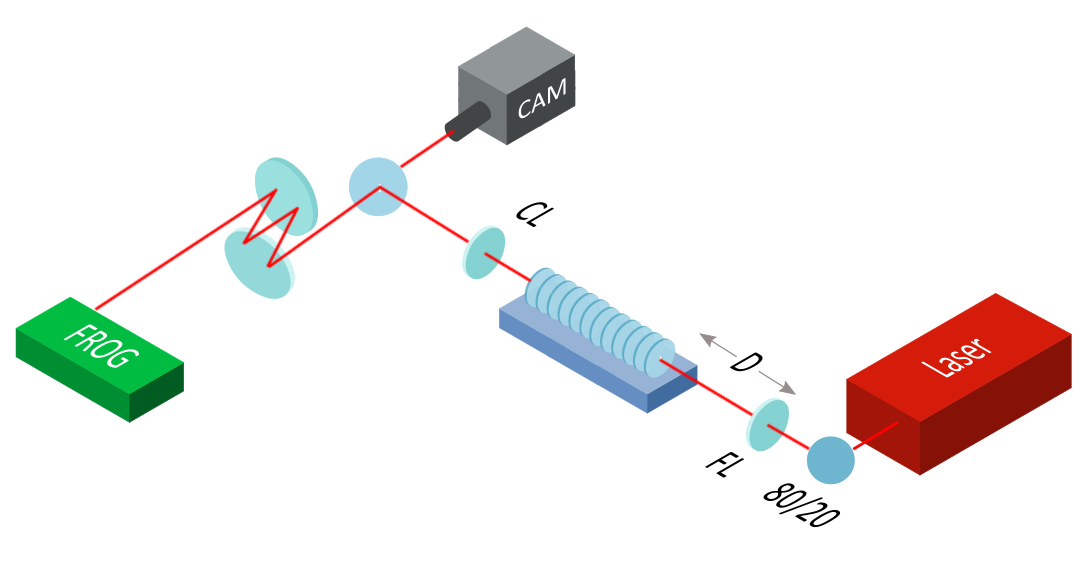
Nonlinear Pulse Compressor
During the summer of 2024, I designed and implemented a nonlinear pulse compressor for terahertz generation and spectroscopy under Prof. Ankit Disa. The project aimed to broaden the spectral bandwidth and shorten the duration of femtosecond laser pulses such that they could be used for cavity engineering to probe the ferroelectric soft mode of strontium titanate (SrTiO3). I was able to compress the pulses by three times and image the spectra with frequency-resolved optical grating (FROG).
Contact
Feel free to reach out!